
In a bold move that signals a massive shift in the artificial intelligence landscape, Anthropic has acquired Coefficient Bio, a stealth biotech startup, for approximately $400 million . What makes this acquisition particularly staggering is the size of the company being purchased: Coefficient Bio has fewer than 10 employees and was founded barely eight months ago .
This all-stock deal effectively values each member of the Coefficient Bio team at roughly $44 million, highlighting the intense premium that tech giants are willing to pay for elite talent at the intersection of AI and life sciences.
Who is Coefficient Bio?
Before this week, Coefficient Bio was largely unknown to the public. The New York-based startup operated in stealth mode with no disclosed revenue, no publicly available product, and no conventional traction metrics.
However, what the company lacked in public profile, it made up for in pedigree. Coefficient Bio was co-founded in the fall of 2025 by Samuel Stanton and Nathan C. Frey, both former computational biology researchers at Genentech’s Prescient Design unit.
The startup’s small team—nearly all of whom are former Genentech experts—had been building a specialized platform designed to act as an “artificial superintelligence for science”. According to reports, their technology enables AI to draft drug research and development plans, manage clinical regulatory strategies, and identify new drug candidates.
Why Anthropic is Betting Big on Biology
Anthropic’s acquisition of Coefficient Bio is not just a talent grab; it is a strategic maneuver to dominate a highly lucrative sector. While Anthropic’s Claude AI model has seen massive success in coding, enterprise search, and general productivity, the company is now aggressively targeting the biopharma industry.
In October 2025, the company launched “Claude for Life Sciences,” integrating its models with industry-standard tools like Benchling and PubMed to assist researchers with literature synthesis and data analysis.
By bringing the Coefficient Bio team in-house, Anthropic is moving beyond general research assistance. The goal is to build domain-specific AI models from the ground up, tailored specifically for protein design, biomolecule modeling, and drug discovery.
“We want a meaningful percentage of all of the life science work in the world to run on Claude, in the same way that that happens today with coding,” said Eric Kauderer-Abrams, head of Anthropic’s Health Care Life Sciences group.
|
Acquisition Details
|
Fact Sheet
|
|
Acquiring Company
|
Anthropic
|
|
Target Company
|
Coefficient Bio
|
|
Purchase Price
|
~$400 Million (All-Stock Deal)
|
|
Team Size
|
< 10 Employees
|
|
Startup Age
|
~8 Months (Founded Fall 2025)
|
|
Key Focus
|
AI-Driven Drug Discovery & R&D Planning
|
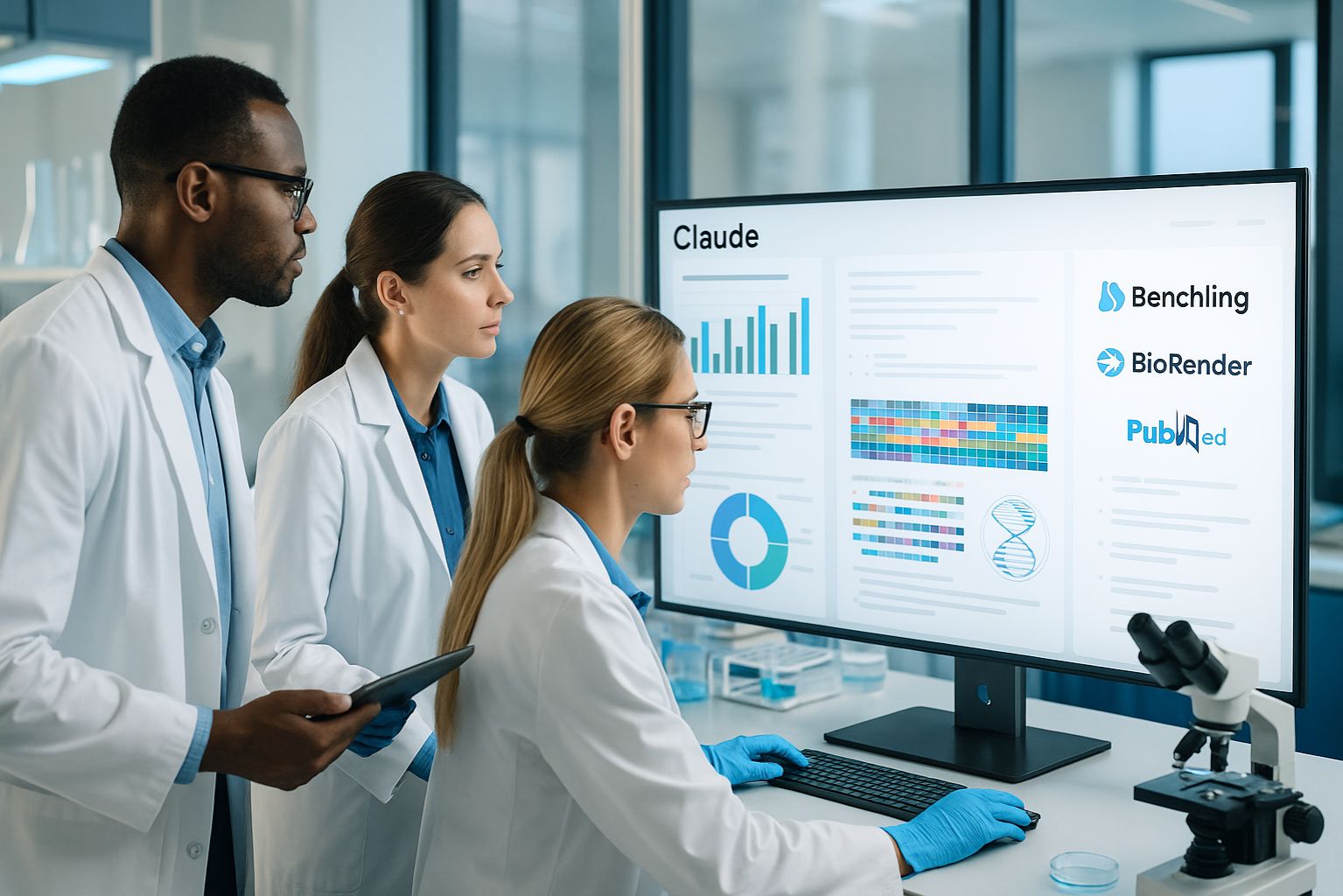
Anthropic aims to embed Claude deeply into biopharma R&D workflows.
The AI Biotech Arms Race
Anthropic is not the only tech giant recognizing the multi-billion-dollar potential of AI in healthcare. The competitive landscape for AI-driven drug discovery is rapidly intensifying:
- Google DeepMind spun off Isomorphic Labs, which already has AI-designed drug candidates entering clinical trials.
- Nvidia recently announced a $1 billion, five-year partnership with Eli Lilly to build an AI co-innovation lab for drug discovery.
- OpenAI has partnered with Moderna to accelerate the development of personalized cancer vaccines.
The logic driving these massive investments is simple. The pharmaceutical industry spends billions on research and development, often facing high failure rates and years-long bottlenecks. Whichever AI foundation model successfully embeds itself into biopharma R&D workflows stands to capture an enormous, recurring revenue stream.
Tech giants are racing to revolutionize the drug discovery pipeline using artificial intelligence.
The Future of AI in Medicine
Paying $400 million for a pre-revenue team of nine people may seem exorbitant to outside observers. However, against Anthropic’s staggering $380 billion post-money valuation, the deal represents just 0.1% dilution.
Venture capital firm Dimension, which held roughly half of Coefficient Bio, is reportedly seeing a 38,513% internal rate of return on their investment—a clear indicator of how rapidly AI valuations are repricing early-stage science bets.
For Anthropic, the price tag reflects a belief in what this elite team can build when backed by massive computing power. If Coefficient Bio’s expertise helps Claude become the default operating system for the pharmaceutical industry, that $400 million acqui-hire will look like the bargain of the century.
References
The Information. “Anthropic Acquires Startup Coefficient Bio for About $400 Million.” April 2, 2026.